Europe’s Crypto Market Enters Supervision Phase After MiCAR Rollout

After MiCAR Rollout, Europe’s Crypto Market Shifts to Supervision and Operational Accountability
Key Takeaways
- Following the implementation of the Markets in Crypto-Assets Regulation (MiCAR), focus in Europe is shifting from licensing to ongoing supervision and operational standards.
- KuCoin EU has been authorized as a Crypto-Asset Service Provider under Austria’s Financial Market Authority.
- Industry discussions in Vienna and Paris highlighted governance, investor protection, and cross-border operational resilience as central themes.
- According to KuCoin EU’s Managing Director Audrey Lim, long-term success under MiCAR will depend on operational maturity rather than license acquisition alone.
Europe’s Crypto Market Moves From Licensing to Supervision
The rollout of the Markets in Crypto-Assets Regulation marks a structural shift in how digital asset businesses operate across the European Union. With the regulatory framework now in place, discussions among industry representatives and regulators are moving beyond the question of who has obtained a license.
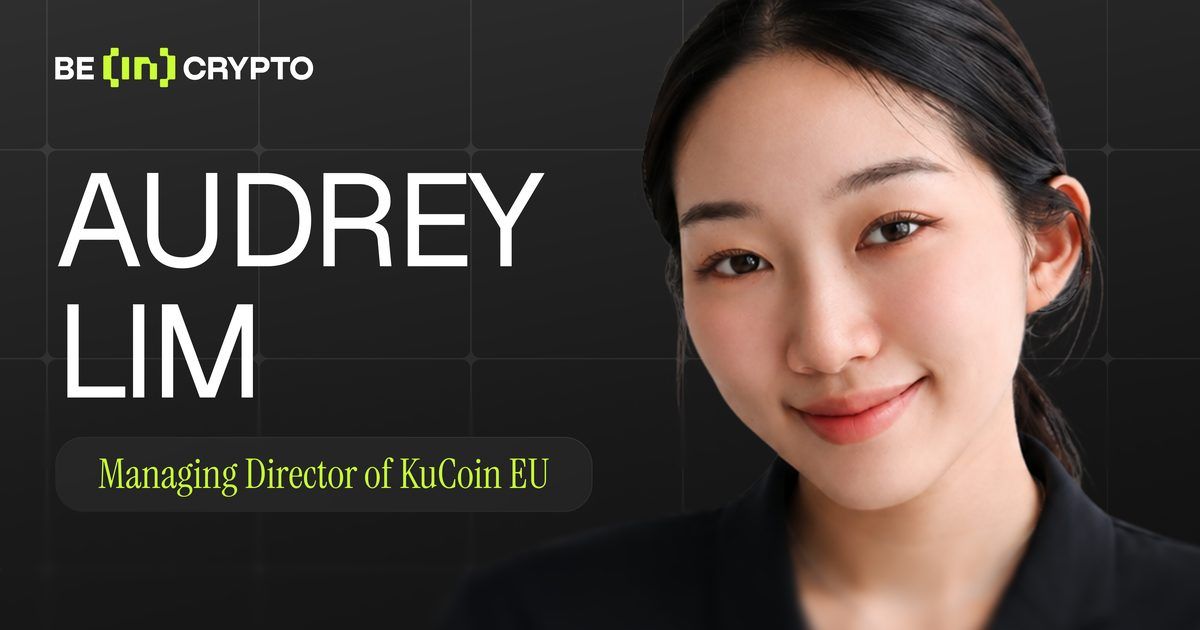
Audrey Lim, Managing Director at KuCoin EU, said that recent regulatory and industry meetings in Vienna and Paris focused on how firms function after authorization. According to Lim, licensing is no longer viewed as the final objective. Instead, it signals the start of a new phase defined by governance standards, investor protection mechanisms, operational resilience, and regulatory engagement across jurisdictions.
KuCoin EU has been positioned as a MiCAR-regulated European entity and is authorized as a Crypto-Asset Service Provider by Austria’s Financial Market Authority. This authorization enables the company to operate within the framework established under MiCAR, which aims to harmonize crypto oversight across EU member states.
Lim described MiCAR as the foundation for a more sustainable European digital asset market. In her view, regulated firms are now expected to demonstrate transparency, compliance, and responsible engagement with users, institutions, and policymakers on an ongoing basis.
Operational Maturity as the Next Benchmark Under MiCAR
According to Lim, the effectiveness of MiCAR will not be measured solely by the number of licensed operators. Instead, she argued that the coming years will test how these companies build their businesses within the regulatory structure.
She said obtaining authorization is an important milestone but only the starting point. The next stage requires firms to demonstrate operational maturity. This includes governance structures, internal controls, and the ability to deliver consistent services across multiple European markets.
Lim emphasized that companies treating compliance and governance as central elements of their business strategy are likely to adapt more effectively to the regulated environment. In this model, regulatory alignment is integrated into daily operations rather than handled as a separate or external requirement.
For users, this shift means that market access alone does not define a platform’s position in Europe. Instead, the focus turns to how reliably and transparently a provider operates under the shared EU framework.
Europe as a Credibility Market for Global Crypto Firms
Lim identified Europe as a strategically important region for international digital asset platforms. The EU’s attempt to create a common regulatory framework across multiple national markets establishes a unified set of standards around governance, transparency, and consumer protection.
Operating successfully under these rules can serve as a demonstration of operational readiness in a fully regulated financial environment. Lim noted that Europe combines commercial opportunity with reputational value, as users, institutions, and partners increasingly expect higher compliance standards.
At the same time, the region presents practical challenges. Firms must invest in compliance infrastructure, governance systems, localization, and operational resilience. Scaling across different European markets also requires maintaining a consistent user experience while adhering to regulatory requirements.
Lim stated that the industry is still adapting to this more structured operating environment. The transition involves building internal processes and local expertise capable of supporting cross-border operations within a harmonized yet complex regulatory landscape.
Compliance and Growth Become Interconnected
A recurring theme in Lim’s remarks is the connection between regulatory responsibility and commercial development. In a regulated environment such as the EU, she said, long-term growth depends on user trust and stable institutional relationships.
This includes cooperation with payment providers and other financial partners, which increasingly rely on clear governance and compliance standards. As a result, compliance and commercial objectives are becoming more closely aligned.
For KuCoin EU, Lim outlined a focus on local operations, experienced teams, internal controls, and engagement with the broader European ecosystem. She indicated that future market leaders will need to combine innovation, user experience, and regulatory discipline within a single operational strategy.
Resilience, Security, and User Protection in Focus
As MiCAR implementation continues, operational resilience is expected to become a defining factor for digital asset firms. Lim pointed to the importance of scalable infrastructure, strong internal governance, and reliable systems that can support consistent services across multiple EU markets.
Security standards, transparency practices, and user protection measures form part of this framework. According to Lim, regulated firms will face rising expectations from regulators, users, institutions, and partners as Europe’s digital asset market becomes more connected with the wider financial sector.
She also noted that the crypto industry is still adjusting to what it means to operate within a long-term, fully regulated financial framework rather than a startup-driven environment. This adaptation includes embedding governance, risk management, and user safeguards into daily operations.
Europe’s Outlook for 2026 and 2030
Looking ahead, Lim said that by the end of 2026 the key indicator of success will be whether MiCAR supports innovation alongside responsible growth at meaningful market depth. She associated progress with a stable operating environment, stronger consumer confidence, and increased participation from institutional and mainstream actors.
By 2030, she outlined a scenario in which Europe could position itself as a leading regulated digital asset ecosystem, combining regulatory structure with sustainable market development. KuCoin EU, she said, aims to build a locally grounded European business aligned with long-term operational standards under the MiCAR framework.
Our Assessment
The statements from KuCoin EU’s Managing Director reflect a broader transition within Europe’s crypto market following the rollout of MiCAR. The focus is shifting from obtaining authorization to demonstrating ongoing governance, resilience, and investor protection within a unified EU framework. For international users and market participants, this change signals that regulatory compliance in Europe now involves continuous supervision and operational accountability rather than a one-time licensing milestone.